
Protecting Waterfront Property From Ongoing Erosion
Shoreline Stabilization in Connelly Springs for waterfront properties experiencing land loss and weakened banks
Boyd Property Solutions provides shoreline stabilization that addresses erosion affecting lakefront and pond-side properties throughout Connelly Springs. When waves, runoff, and fluctuating water levels gradually wear away banks, property owners lose usable land and face increasing risk to structures near the water's edge. The work involves reinforcing vulnerable areas with methods designed to withstand the specific water conditions present at each site.
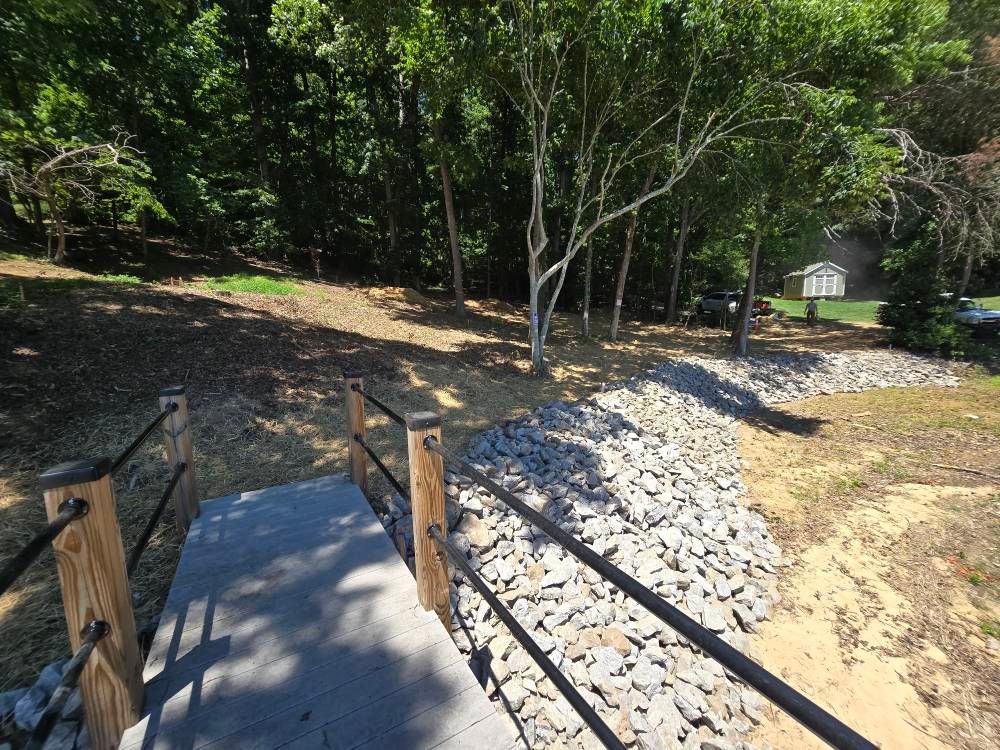
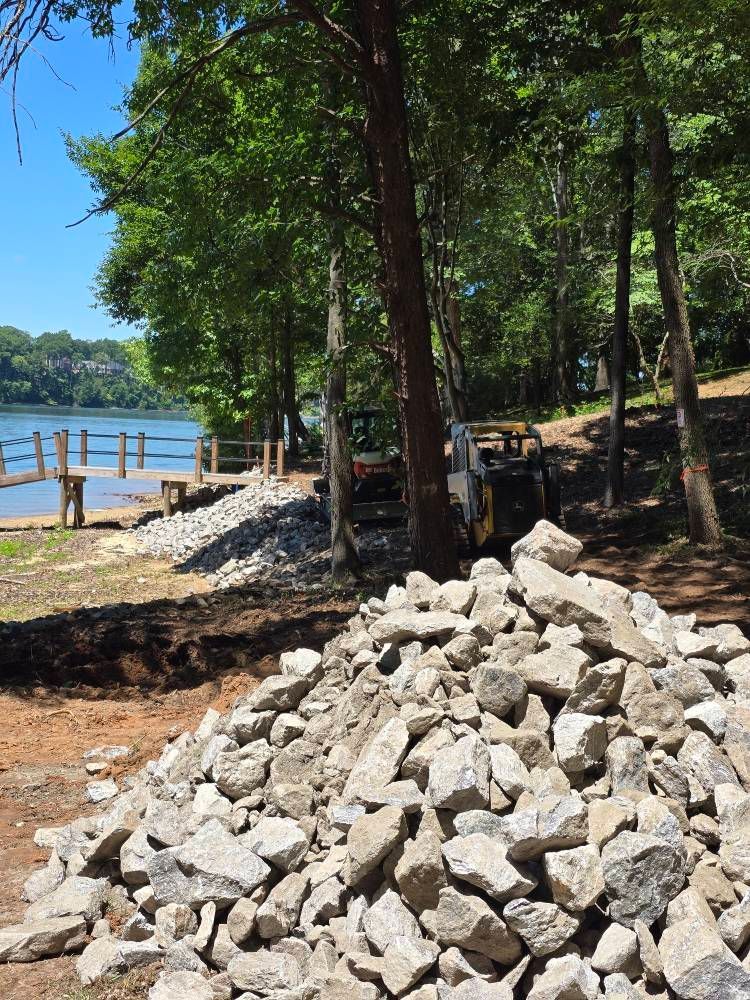
Stabilization methods strengthen shoreline areas by reducing the force of wave action and redirecting water flow that undermines soil. Depending on slope angle, soil composition, and typical water movement patterns, the approach may involve rock placement, vegetation establishment, or structural reinforcement that holds soil in place while allowing natural drainage. Properties around lakes and ponds in this region often see accelerated erosion during heavy rain events when runoff increases water velocity along banks.
Request a shoreline assessment to evaluate current erosion patterns and site-specific water conditions.
How Stabilization Addresses Changing Water Conditions
Effective stabilization accounts for seasonal water level changes and storm-driven wave activity that vary throughout the year. The placement and sizing of materials must match the energy levels typical for that waterfront location, since undersized solutions fail during high-water events while oversized approaches create unnecessary cost. Site evaluation identifies where erosion is most active and what forces are driving soil loss.
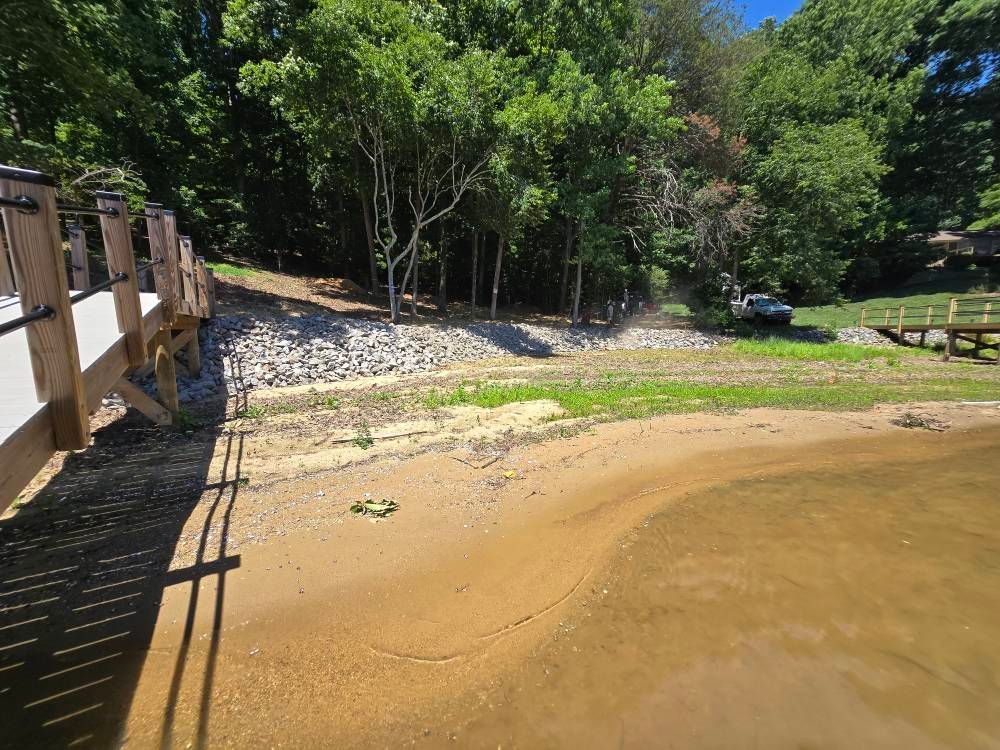
After stabilization is complete, you notice that banks hold their position during rain events rather than slumping into the water. Vegetation establishes more successfully on protected slopes, and the boundary between land and water remains consistent instead of gradually retreating. Usable yard space near the shoreline remains stable, and structures located near the water's edge no longer face undermining risk from bank failure.
Long-term land preservation depends on matching stabilization methods to the specific exposure and soil conditions at your property. Solutions designed for high-energy wave zones differ significantly from those appropriate for sheltered coves, and slopes with sandy soil require different reinforcement than clay banks. Boyd Property Solutions adapts methods to environmental factors present at each waterfront site.
Questions Property Owners Ask About Stabilization
Waterfront property owners often want to understand how stabilization work protects their investment and what factors influence the approach used at their specific site.
What causes shoreline erosion to accelerate over time?
Erosion typically increases as vegetation is lost and soil becomes exposed, allowing water to move material more easily with each storm event. Once protective plant roots are gone, wave action and runoff carve deeper into banks with less resistance, and the erosion zone expands both horizontally and vertically.
How does stabilization work adapt to different water conditions in Connelly Springs?
Properties on larger lakes with wind-driven waves require heavier rock and deeper placement than ponds with minimal wave action. Site assessment measures slope angle, soil type, and typical water movement to determine what size materials will remain stable during high-water periods common in this region.
What signs indicate that shoreline stabilization is needed?
Visible slumping of banks, exposed tree roots near the water's edge, sections of lawn or landscaping that have fallen into the water, and increasing distance between structures and the stable ground all indicate active erosion that will continue without intervention.
How quickly does stabilization work protect against further land loss?
Protection begins immediately after installation, though vegetation-based components become more effective as roots establish over the first growing season. Rock and structural elements provide instant resistance to wave action and runoff forces.
What determines whether existing shoreline can be stabilized or requires more extensive reconstruction?
The remaining stable soil depth, slope angle, and whether active slumping is still occurring determine the approach needed. Banks that have already failed down to the waterline require rebuilding before stabilization, while those with intact soil above the erosion zone can often be reinforced in place.
Boyd Property Solutions works with waterfront property owners to stop ongoing erosion and protect land area from further loss. Schedule a site visit to evaluate shoreline conditions and discuss stabilization methods suited to your property's specific water exposure and terrain.